Electronic cigarettes, or vaping has become more widely used in recent times which has raised questions about their security and health. Vaping may cause second-hand smoke exposure, which is especially dangerous in indoor settings like office buildings, schools and homes. Vape detectors can be utilized to monitor indoor vaping and help address the problem. In this post, we will explore the different types of vape detector available, their features, and how they work in different environments.
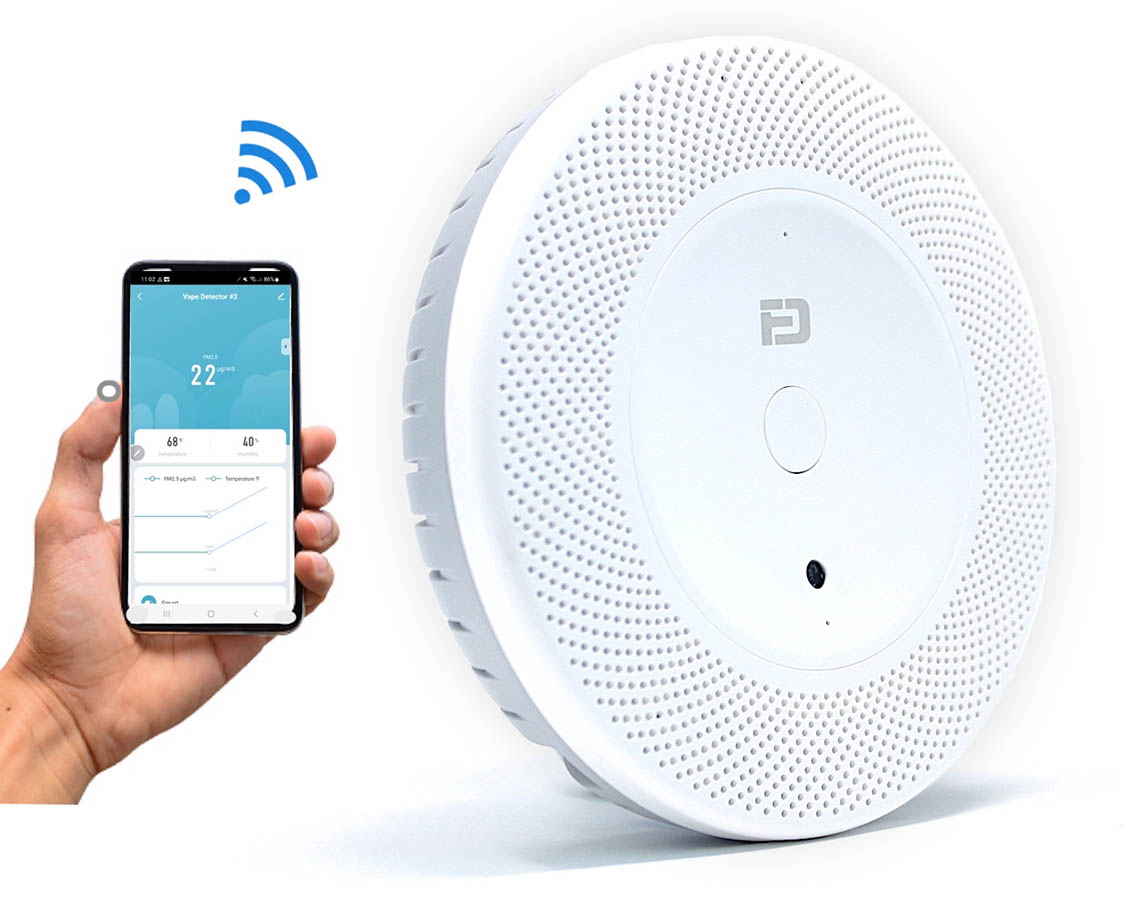
Vape detectors are electronic devices which use sensors to determine the presence of vape smoke or particles in the air. They can be used to monitor the emissions of indoor vapes. This can be useful for enforcing laws against smoking and finding places where vaping could occur. Vape detectors come in various types that include those designed for use at homes, at schools and in other public spaces.
Vape detector for schools use are becoming increasingly popular among families who want to protect their children from the harmful effects of secondhand smoke. They are usually small and discrete. They can be put anywhere in the house where vaping might occur, such as bedrooms or living areas. These detectors utilize different sensors to detect vaping. They are able to detect vaping device particles using PM2.5 sensors. Certain vape detectors have apps on smartphones that inform you when vaping is detected.
Schools are also a location where vape detectors are used to tackle the problem of indoor smoking. Schools have adopted a smoking policy that bans use of vaping device. Vape detectors can be used to enforce school rules and aid in identifying areas which students are smoking. These devices are usually installed in public areas like bathrooms, hallways and locker rooms. They are also linked to central monitoring systems which notify administrators when vaping has been found.
Vape detectors used in schools are typically higher-tech than those that are designed for home use, as they need to cover larger areas and be able to discern between vaping as well as other kinds of particles or smoke. They utilize a mixture of sensors, such as laser scattering sensors, to detect vaping and provide accurate readings. Some models even distinguish between different types of vaping devices, such as e-cigarettes and vaping pens.
Vape detectors can also be found in public spaces like hotels, casinos and even offices. These detectors create a safe and healthy environment for employees and guests. They can monitor the indoor air and detect vaping. They can be used in typical areas such as conference rooms, break rooms, and lobby spaces. They give real-time information on the indoor air.
Laser scattering technology is one the most significant features of a vape detecting device. It can detect the particles of smoke from vaping. This technology can detect tiny amounts of vape smoke. Laser beams are used to detect light scattering caused by particles that are in the air. Vape detectors can provide accurate measurements of indoor air quality and identify areas where vaping occurs.
Vape detectors designed for home use are also equipped with a crucial characteristic: they can be connected to smartphone apps that send out alerts and notifications in real-time whenever vaping has been discovered. This feature is especially beneficial for parents, who may need to track the indoor vaping habits of their children, or school administrators, who wish to be informed when students use. Some vape detectors also come with cloud-based storage of data, which is useful to track patterns in indoor air quality and identifying areas that need additional attention.
Vape detectors provide an easy method to identify indoor vaping in the home, at schools, or in other public spaces. They use sensors and technology to accurately measure indoor air quality. They can also be linked to apps for smartphones to receive real-time notifications and alerts.
Vape detectors protect those who are exposed indoor air pollution. They reduce distractions so that we can focus on monitoring and maintaining the purest possible air quality. The technology behind these detectors is relatively new, and their results must be investigated. But, it’s believed that they can be used to improve indoor air quality as well as overall health. Vape detector technology has proved that it is effective in capturing and reducing harmful elements such as volatile organic compounds (VOCs), carbon monoxide (CO) and ultrafine particulate matter (PM2.5). Vape detectors detect the products vaping with more accuracy and ease than ever before. Vape detectors are a welcome improvement in terms of safety and health. The popularity of this technology is expanding, and in the future, it could help us to stay safe from the risks associated with smoking vapes that are secondhand or inside our homes.